
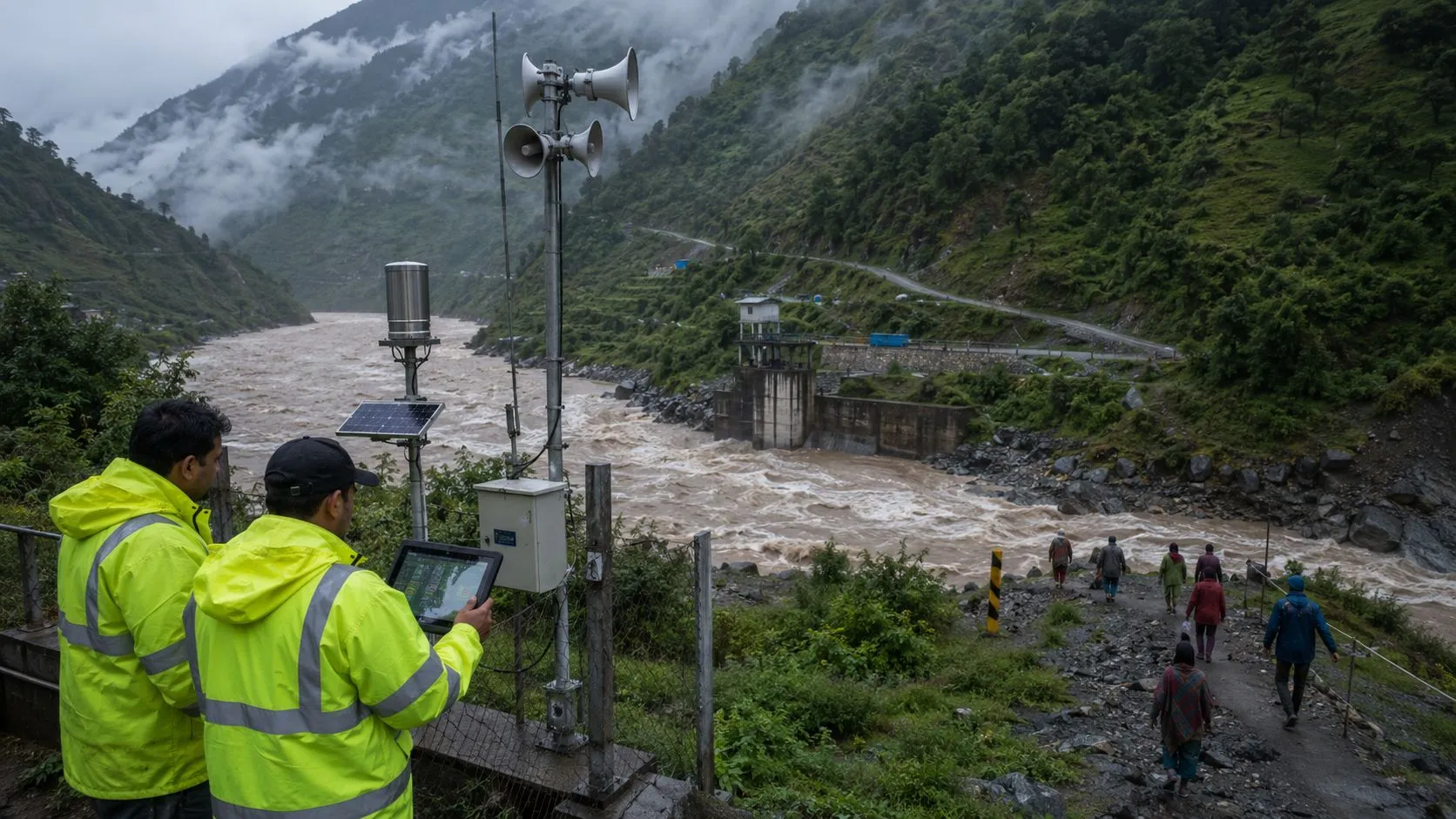
On August 26, a major flash flood and glacial landslide struck northern Nepal and areas along the Nepal–China border.
The disaster damaged settlements, roads, markets and hydropower facilities. The region’s challenging terrain further complicated communication, evacuation and emergency response.
Our thoughts are with the affected communities and all those involved in the ongoing response.
The event also raises an important question for hydropower operators and communities located along mountain rivers:
How quickly can an upstream hazard be detected, assessed and transformed into a clear warning for people downstream?
River gauges, weather stations and video surveillance can help identify abnormal conditions and provide valuable information about developing risks. However, detection alone is not enough. Identifying a hazard is only the first step. The information must be verified, assessed and converted into an appropriate warning before it can support effective emergency action.
In many flash-flood and landslide scenarios, the available response window can be extremely short. Warning information must reach the right locations quickly and clearly.
An effective water-warning process may therefore involve:
Monitoring → Verification → Zoned Activation → Voice Instructions → Response Confirmation
Fixed outdoor sirens and public-address speakers can help deliver warnings across river valleys, hydropower facilities, construction sites and nearby communities. Remote activation enables centralized operators to respond quickly across multiple warning zones, while local manual controls provide an additional means of activation when normal communication networks are disrupted.
Reliable warning infrastructure also requires more than simply sending an activation command.
System feedback and equipment diagnostics are equally important. Operators need to know not only whether a warning command has been issued, but also whether the warning equipment has successfully responded. This visibility can help emergency teams identify communication or equipment failures and take corrective action when necessary.
At SENKEN TECH, we view water-warning infrastructure as an integrated communication network rather than a collection of individual sirens.
The goal is not simply to install warning devices. It is to build a reliable connection between hazard detection, decision-making, warning delivery and emergency response.
Technology cannot prevent every flash flood or landslide.
But a well-designed warning network can shorten the gap between detecting a developing hazard and helping people take protective action.
In fast-moving water emergencies, every minute of warning can mean more time to respond—and greater distance from danger.