
AOA, TDOA and TOF: Different Approaches to Drone Localization
1. AOA — Angle of Arrival
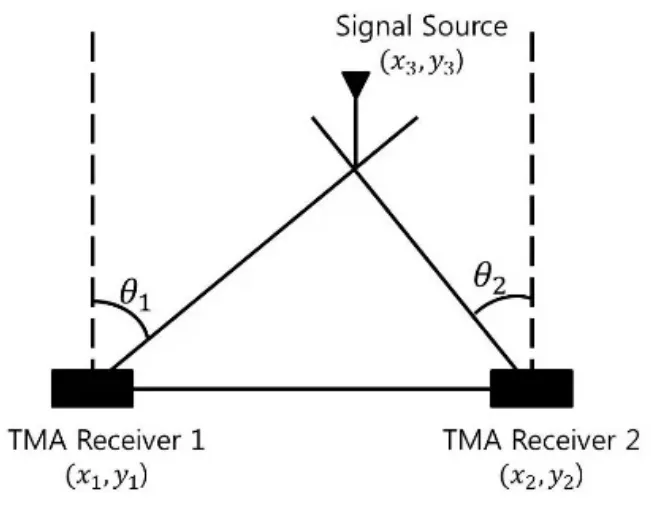
AOA (Angle of Arrival) determines the direction from which an RF signal is received. By analyzing the signal received by an antenna array, the system can calculate the direction of the transmitting source.
For drone detection, AOA can provide rapid directional information and is particularly suitable for systems that need to monitor multiple RF-emitting drones simultaneously.
One of the advantages of an AOA-based architecture is that a relatively small number of sensing units can provide broad situational awareness, depending on antenna configuration, deployment environment and signal conditions.
2. TDOA — Time Difference of Arrival
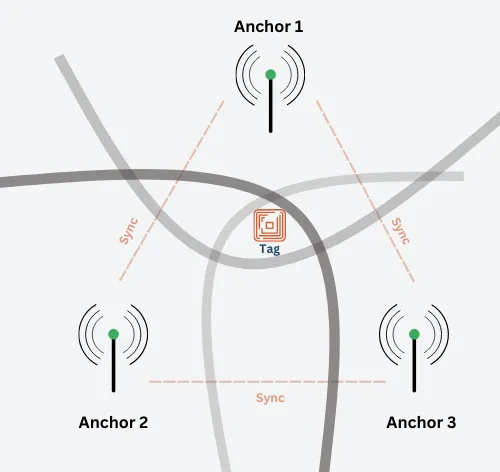
TDOA (Time Difference of Arrival) uses multiple geographically separated receivers. By comparing the arrival time of the same RF signal at different sensors, the system can calculate the signal source's location.
TDOA is therefore particularly suitable for distributed sensor networks and large-area drone monitoring. However, it generally requires multiple synchronized detection nodes and appropriate network deployment.
3. TOF — Time of Flight
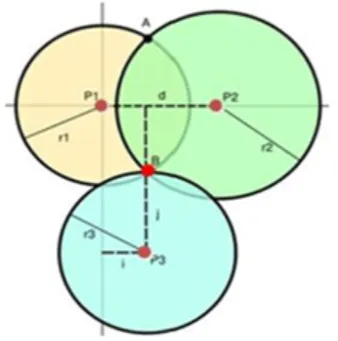
TOF (Time of Flight) determines distance by measuring the time required for a signal to travel between a transmitter and receiver.
In practical drone detection applications, TOF-based positioning depends heavily on the signal characteristics and system architecture. It is therefore often considered together with other sensing and localization technologies rather than being used as a standalone solution.
Why Does SENKEN-TECH Focus on AOA?
At SENKEN-TECH, our RF drone detection systems primarily follow an AOA-based detection and positioning approach.
The objective is not simply to detect whether a drone is present, but to provide fast detection, multi-target monitoring and useful positioning information with a relatively streamlined sensor architecture.
Multi-Target Detection
Modern airspace security systems may need to monitor several drones at the same time.
AOA technology allows the system to process directional information from multiple RF signals, helping provide simultaneous awareness of multiple targets. This is particularly valuable for scenarios involving complex or high-density drone activity.
Fewer Detection Units
Compared with architectures that rely heavily on multiple geographically distributed sensor nodes, an AOA-based system can potentially achieve wide-area directional detection with fewer physical detection units, depending on the deployment environment.
This can simplify system deployment and reduce infrastructure requirements.
Remote ID and Protocol Analysis
AOA is only one part of the SENKEN-TECH detection architecture.
By combining AOA technology with Remote ID (RID) and drone protocol analysis, the system can extract additional information from compatible drone signals. Remote ID can provide identification and telemetry-related information when supported and available, while protocol analysis can help classify detected signals. Passive RF systems can also use known UAS radio signatures to assist with drone identification.
Algorithm Optimization for Better Positioning
Signal direction alone does not necessarily provide a complete picture of a drone's location.
SENKEN-TECH combines RF signal processing, AOA, Remote ID, protocol analysis and algorithm optimization to improve the accuracy and stability of drone positioning.
This approach allows the system to move beyond simple "drone detected" alerts toward more useful information such as drone direction, target location and identification data, subject to signal availability and the operating environment.